
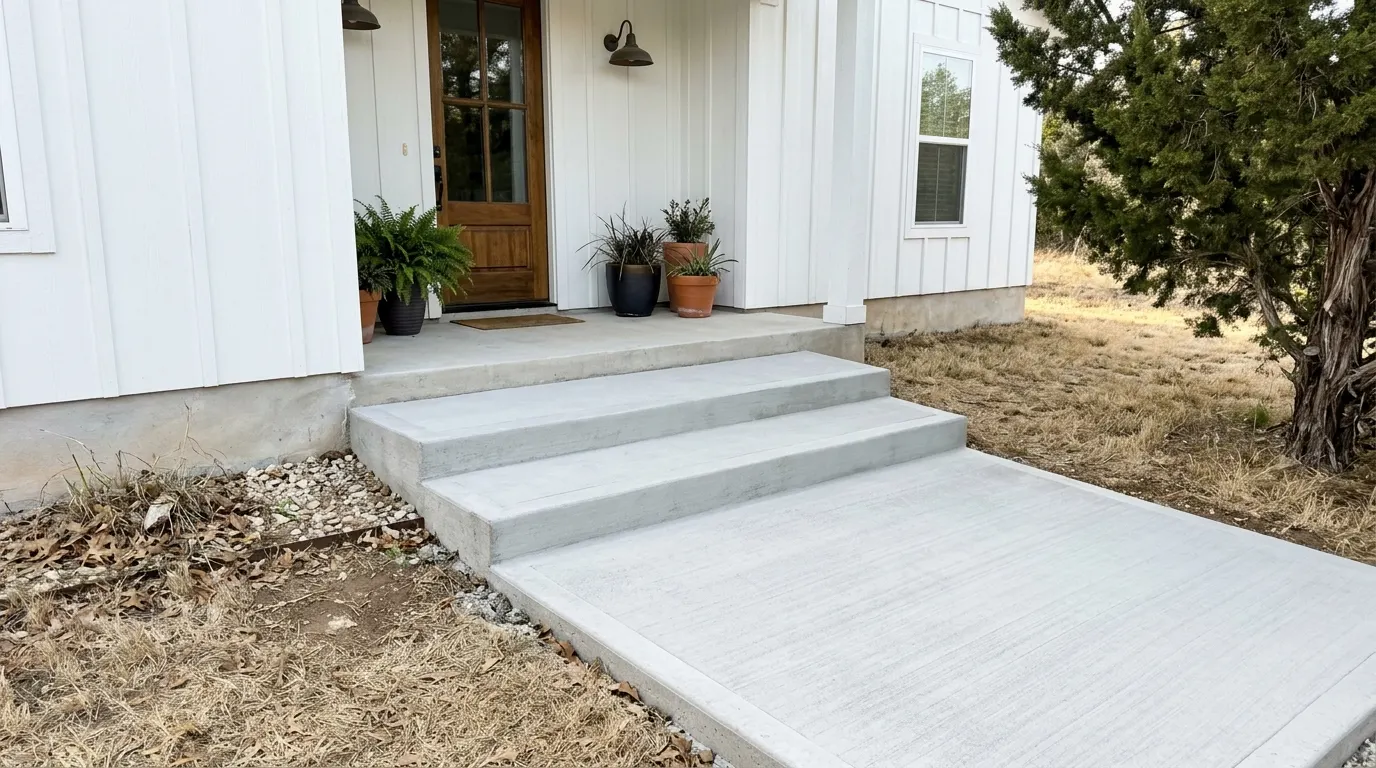
What We Handle
- Front porch slabs
- Entry steps and stoops
- Back door and patio steps
- Wider landings at doorways
- Broom or textured non slip finishes
- Tearing out and replacing sunken steps
When You Need Concrete Steps & Porches
Look at your entry. If there is a gap opening between the porch and the foundation, or the steps rock or tip to one side, the soil under them has probably moved. Risers that are different heights are a trip hazard, especially for kids and older family members. Chipped edges, crumbling corners and water pooling against the front door are other signs. Many people also replace steps when they want a wider, more welcoming porch before selling a home or hosting family.
Our Process
Measure the entry
We measure the door height, landing size and run so each step comes out the same height and a comfortable depth.
Remove the old steps
If old concrete or wood steps are there, we break them out and haul the debris away.
Prep and form
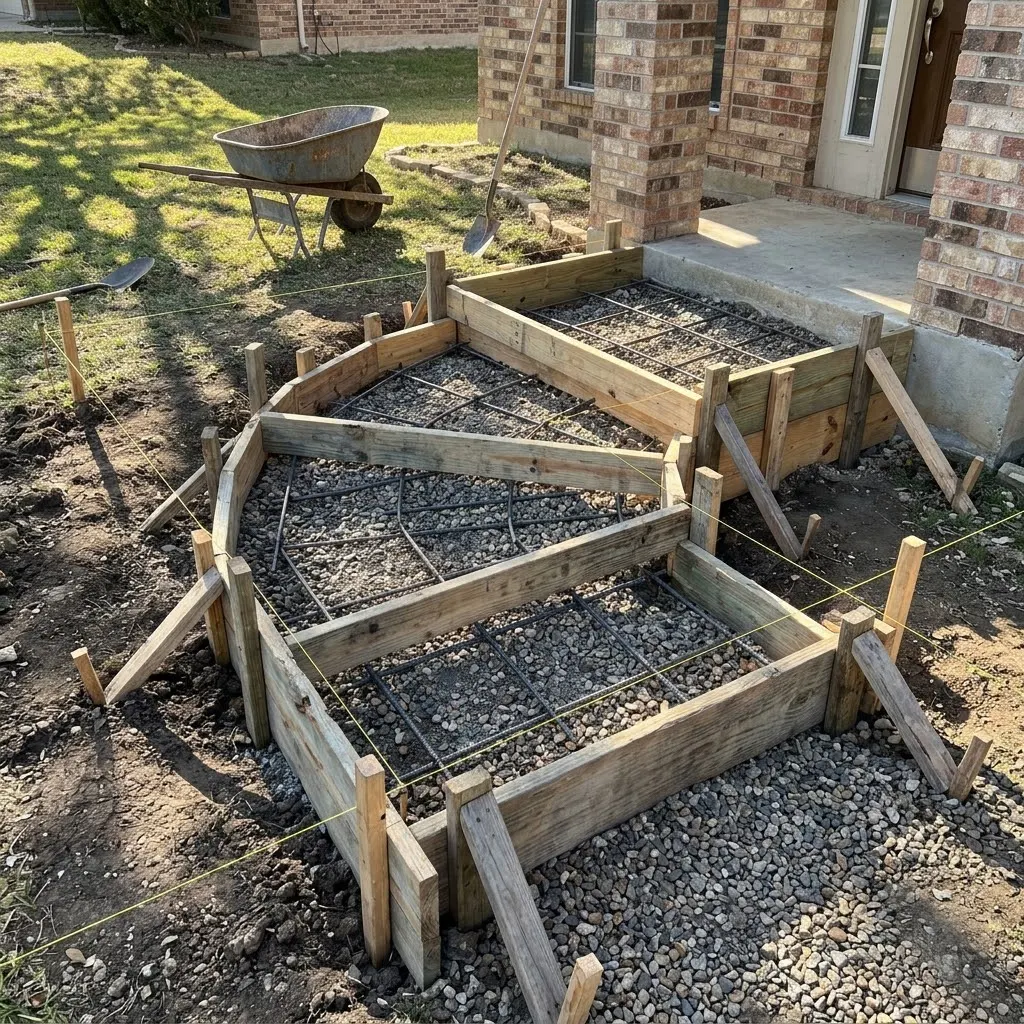
Our crew compacts the base, sets steel and builds forms for each tread and riser.
Pour and finish
We pour, shape the edges and add a textured finish so the steps have grip when wet.
Cure and open
The forms come off once the concrete has set, and we keep it moist while it cures. We let you know when it is ready for foot traffic.
Built for Georgetown Soil and Heat
Steps and porches sit right against the house, which puts them in a tough spot on Georgetown clay. The foundation stays put while the soil under a porch can swell after a wet spring and drop during a dry summer. That movement is what opens the gap between steps and the house. We compact the base well, tie in steel and slope the surface away from the door so rain does not collect there and soak the soil. In the heat we pour early and keep the fresh concrete moist so small edges and corners do not crack while curing.
What Affects the Price
- Number of steps and porch size
- Removal of old steps or porch
- Height from ground to door
- Finish and edge style
- Railing needs or other add ons
- Access to the front of the home
Why Customers Choose Us
Concrete Steps & Porches FAQ
Why are my concrete steps pulling away from the house?
Usually the soil under the steps has shifted or settled while the house foundation stayed in place. In Georgetown, expansive clay is a common cause. Replacing them with a well compacted base and good drainage helps prevent it from happening again.
Can you pour new concrete steps over old ones?
Sometimes, but if the old steps are cracked or sinking, pouring on top just carries the problem forward. We will look at yours and tell you whether removal makes more sense.
How long before I can walk on new concrete steps?
Light foot traffic is usually fine after a day or two, depending on the weather. We will give you clear timing on the day we pour.
Can you make my front porch bigger?
Yes. We can pour a wider porch or landing so there is more room at the door, as long as it works with your entry and drainage.
Do concrete front steps need a handrail?
It depends on your city's rules and how many steps you have, so requirements vary from place to place. Even when one is not required, a railing helps older family members and kids. We can plan the steps so a railing can be added, and talk through what your city may expect.
What is a comfortable height for each concrete step?
Keeping every riser the same height matters most, since an odd step is what trips people. For example, many home steps land around 7 inches tall with treads about 11 inches deep, though local rules can differ. We measure from the door down so the steps come out even.
How much does it cost to replace front porch steps?
The number of steps, the porch size and the height from ground to door drive most of the cost. Breaking out old concrete, the edge and finish style, and how easy it is to reach the front of the house also matter. Call 737-352-6148 or request a quote and we will look at your entry.
How should I care for new concrete steps?
Keep heavy planters and furniture off for the first few weeks, and avoid dragging anything sharp across the edges. On the rare Central Texas freeze, use sand for grip instead of rock salt, which can flake the surface. A penetrating sealer after the concrete cures adds extra protection.