
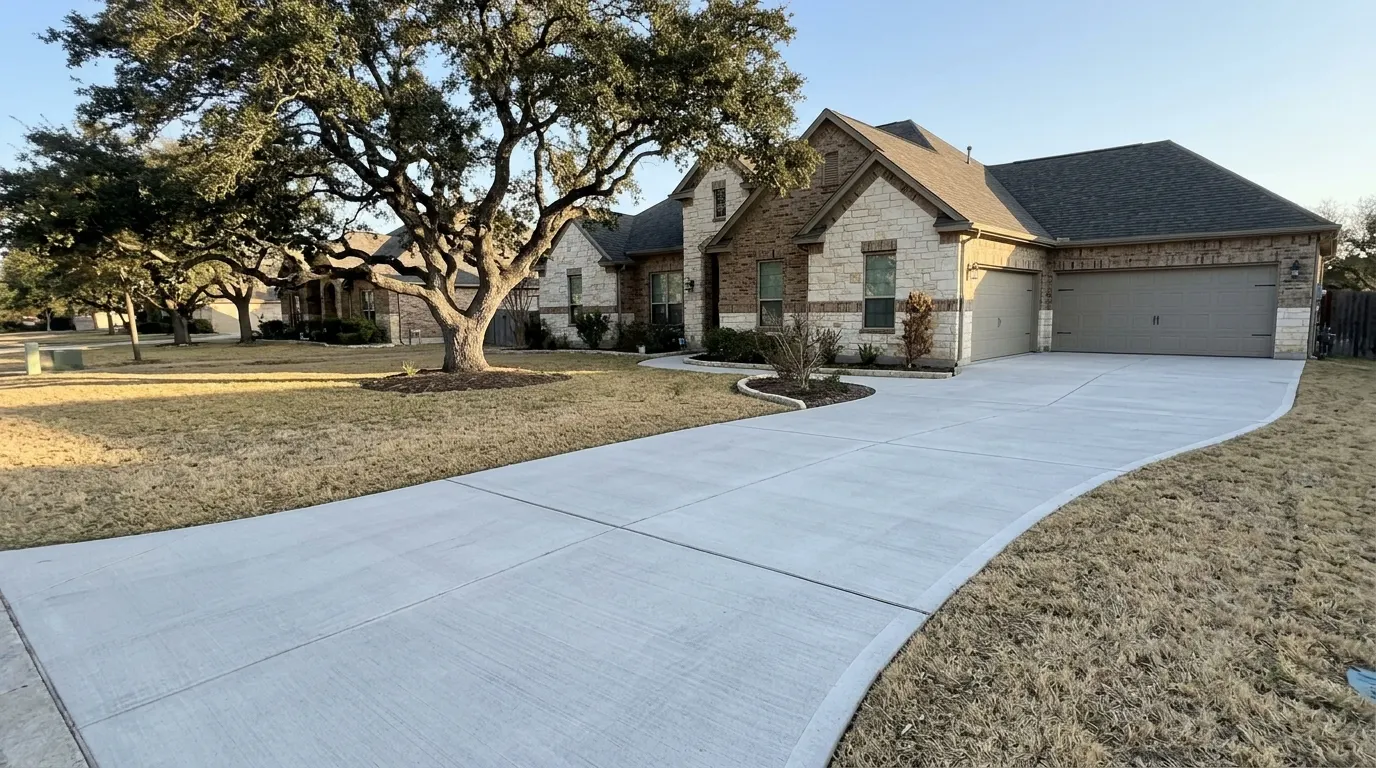
What We Handle
- New driveways for new homes
- Full driveway tear out and replacement
- Driveway widening and extensions
- Extra parking pads beside the drive
- Circular and side entry driveways
- Driveway aprons at the street
- Broom finish or decorative edge borders
When You Need Concrete Driveways
Most people call us when the old driveway starts to show its age. Maybe a crack runs from the garage to the street, or one panel has dropped and catches your tire. Water may pool near the garage door after every storm. Some homeowners just need more room, like a spot for a third car, a boat or a work truck. And if you are building a new home on acreage, you need a drive that can carry heavy delivery trucks without breaking down.
Our Process
Look at the site
We walk the driveway with you, check the slope and drainage, and talk about size, shape and finish.
Remove and grade
Old concrete is broken out and hauled away, then the ground is graded so water runs toward the street, not your garage.
Build the base
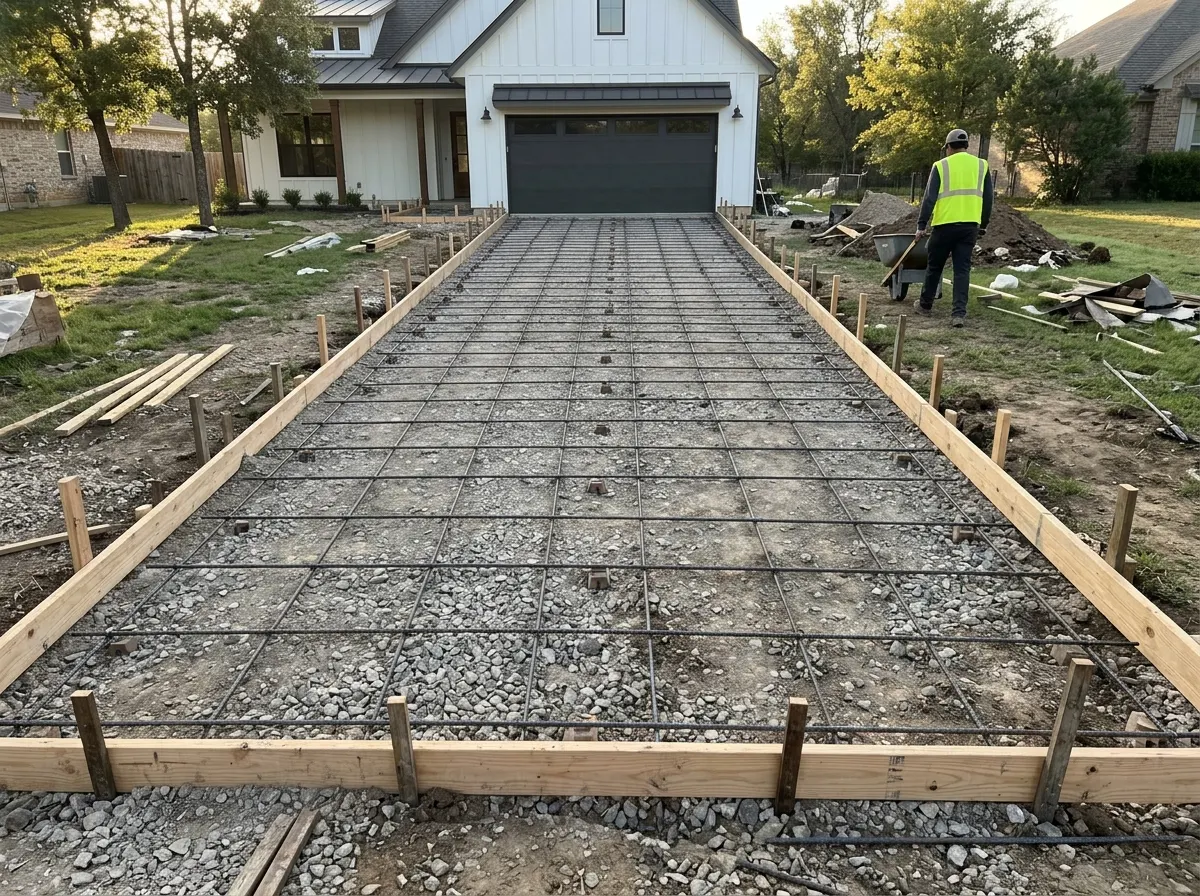
We lay and compact a base layer, set the forms and place rebar or wire mesh to tie the slab together.
Pour and finish
Our crew pours, levels and finishes the concrete, then cuts control joints so any shrink cracks stay neat and straight.
Cure and hand over
We keep the slab moist while it cures and let you know when it is ready for foot traffic and then for cars.
Built for Georgetown Soil and Heat
Much of Georgetown sits on clay that swells after a wet spring and shrinks hard in a summer drought. A driveway poured on loose fill moves with that clay and cracks. We dig out soft spots, compact a firm base and use steel reinforcement so the slab moves as one piece. West of I-35 the problem flips, with shallow limestone that can mean rock work and uneven grades. In July heat we pour early in the morning and keep the concrete wet while it cures, which helps prevent surface cracks from fast drying.
Estimate Your Concrete
What Affects the Price
- Driveway length, width and shape
- Removing and hauling the old driveway
- Grading, fill or rock excavation needed
- Slab thickness and reinforcement
- Finish choice, like broom or decorative borders
- Access for the truck and equipment
Why Customers Choose Us
Concrete Driveways FAQ
How long before I can drive on a new concrete driveway?
You can usually walk on it within a day or two. Cars should wait longer, often about a week, and heavy trucks longer still. We will give you the timing for your pour since weather changes it.
Why do concrete driveways crack in Georgetown TX?
The clay soil here swells when wet and shrinks in drought, which pushes and pulls on the slab. Good base prep, steel reinforcement and planned control joints keep that movement under control.
Can you make my existing driveway wider?
Yes. We can add a strip along one or both sides, or a parking pad, and tie the new concrete into the old so it holds together. It will look newer than the old section at first.
Should I seal my new concrete driveway?
Sealing helps protect the surface from water, stains and wear. We can talk through whether it makes sense for your driveway and when to do it after the concrete cures.
How thick should a concrete driveway be?
For everyday cars, many residential driveways are poured around four inches thick, for example, with thicker edges or sections where heavier vehicles will park. If you plan to keep a work truck, RV or trailer on the drive, tell us so we can add thickness and steel in those spots.
What happens on the day my driveway is poured?
The concrete trucks usually show up early in the morning, and the crew places, levels and finishes the slab in a few hours. Move any cars you need out of the garage the night before, since the drive will be blocked for several days. Keep kids and pets off the fresh concrete until we say it is safe to walk on.
Do I need HOA approval for a new driveway in Georgetown?
Many Georgetown neighborhoods have an HOA that reviews changes to a driveway's size, shape or finish, especially widening. The city may also have its own rules for the apron where the drive meets the street. Check your HOA guidelines before the work starts, and we can talk through what to look for.
How do I take care of a new concrete driveway?
Clean up oil and fluid spills soon so they do not soak in, and keep heavy items like moving pods or roll off dumpsters off the edges, which are the weakest part of the slab. Point downspouts away from the concrete so the base stays dry. If you chose a sealer, plan to reapply it every few years.