
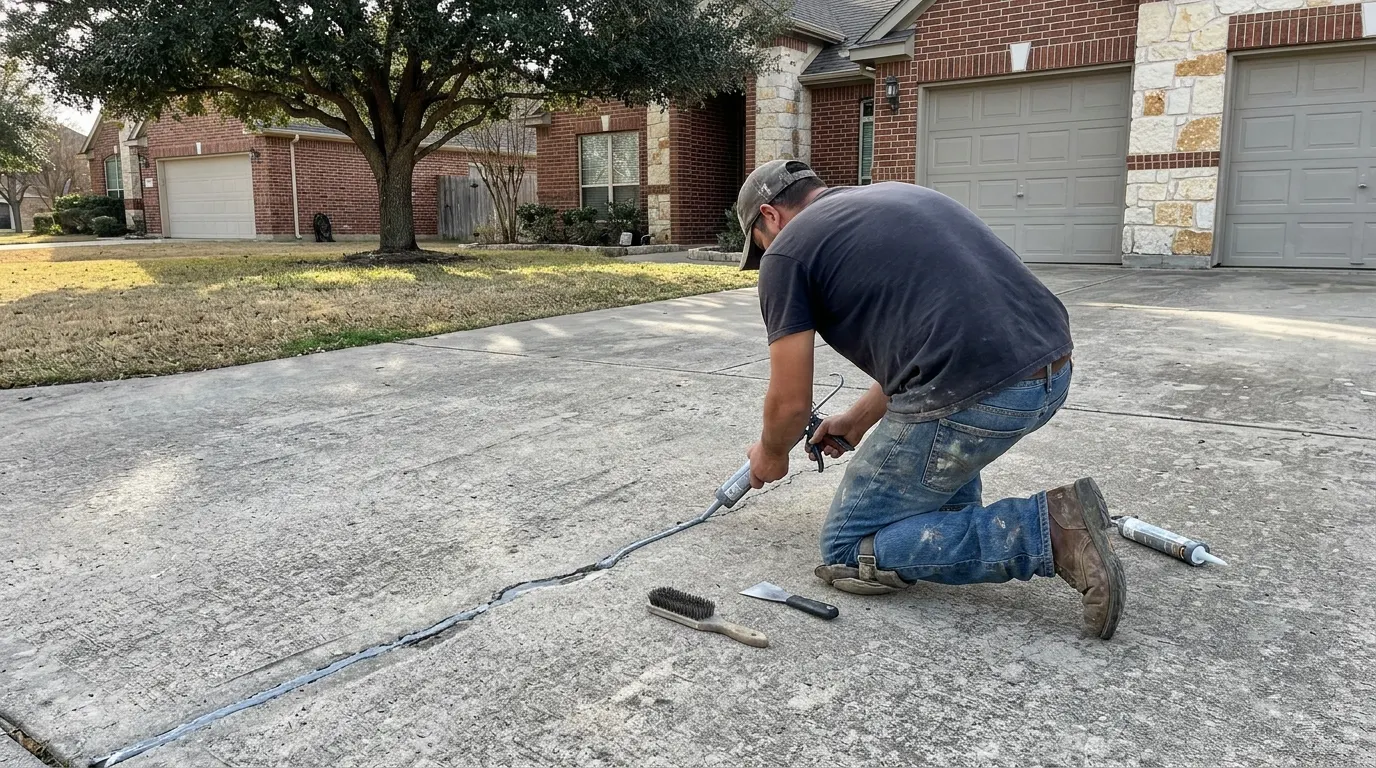
What We Handle
- Concrete crack repair
- Concrete leveling
- Sinking slab repair
- Trip hazard correction on sidewalks
- Joint and edge repair
- Spall and chip patching
When You Need Concrete Repair
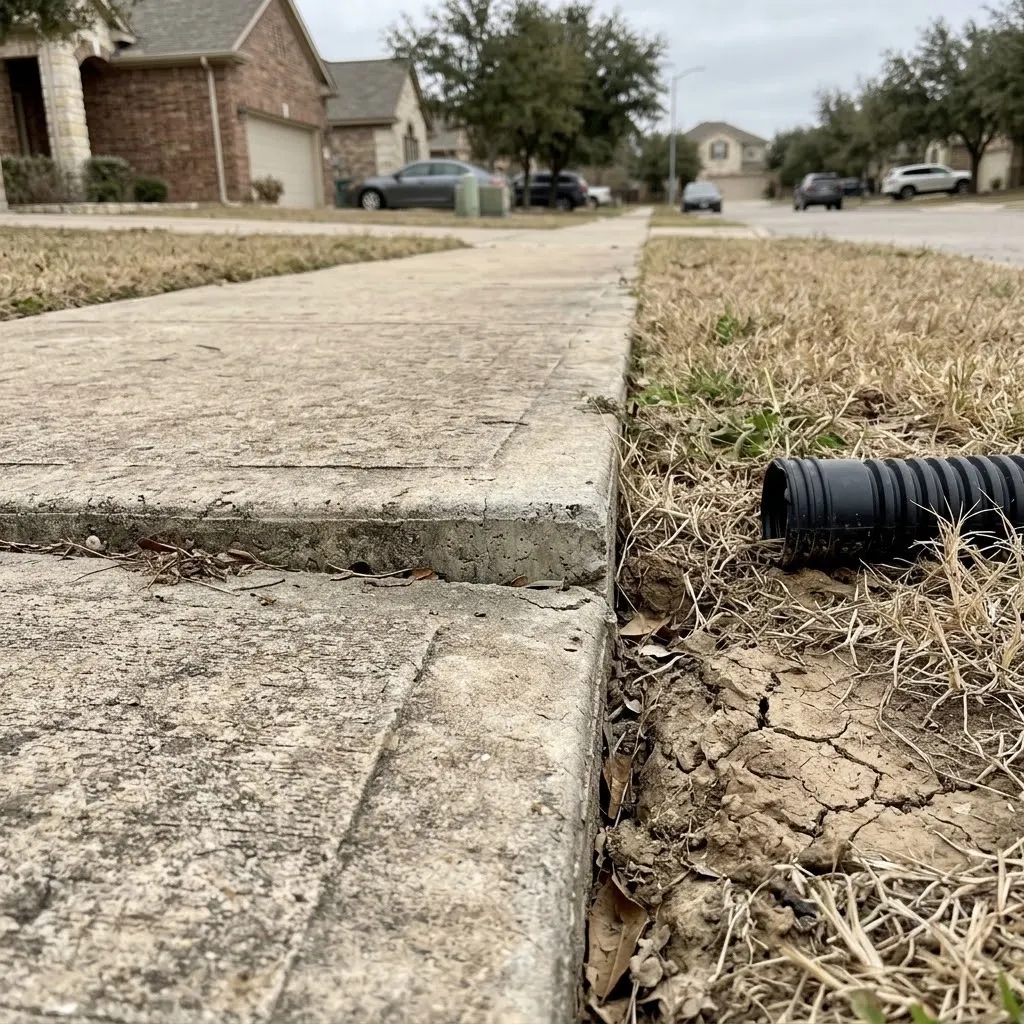
Call about repair when a sidewalk panel has dropped and left a lip people trip on, or a driveway section has sunk so water runs toward the garage. Cracks that keep widening, slabs that rock when you step on them, and gaps opening between the patio and the house are all signs of trouble below. Catching it early usually means a smaller fix, before water gets under the slab and makes the void bigger.
Our Process
Find the cause
We look at where the slab moved, how far, and why, whether it is soil, drainage or a washed out base.
Recommend the fix
We explain if crack sealing, leveling or a partial replacement fits best, and what each one will and will not solve.
Prep the area
Our crew cleans cracks and joints, or drills small injection holes for slab leveling.
Repair or lift
We fill cracks with a flexible repair product, or lift and support sunken sections back toward level.
Seal and protect
We seal joints and point out drainage changes that will help keep the repair from coming back.
Built for Georgetown Soil and Heat
Most of the repair calls around Georgetown trace back to soil. The clay east of I-35 can shrink away from the bottom of a slab during a long drought, then swell after a wet spring, and that up and down movement opens cracks and leaves voids. Downspouts dumping water next to a walk make it worse by washing out the base. When we repair a slab here, we also look at gutters, slope and open joints, because fixing the water path is what keeps a leveled slab from sinking again.
What Affects the Price
- Type of repair, cracks, leveling or patching
- How many slabs or sections are affected
- How far the concrete has sunk
- Size of the void under the slab
- Drainage fixes needed nearby
- Access to the work area
Why Customers Choose Us
Concrete Repair FAQ
Can a sinking concrete slab be lifted instead of replaced?
Often, yes. If the slab is mostly in one piece, it can usually be lifted back toward level and supported underneath. If it is broken into many pieces, replacement may make more sense, and we will tell you which is the better choice.
Are cracks in concrete normal in Georgetown, TX?
Small hairline cracks are common with the heat and clay soil here and are usually cosmetic. Cracks that widen, shift up and down or let water through should be repaired before they grow.
Will a repaired crack match the rest of my concrete?
A repaired crack is usually visible, because new material rarely matches older concrete exactly. The goal is to seal out water and stop movement. If looks matter most, ask us about resurfacing after the repair.
How soon can I use my driveway after concrete leveling?
Leveled slabs can often be used again soon after the work is done, much faster than a new pour. Austin Concrete Contractors Georgetown will give you a clear timeline for your job.
Why is the surface of my concrete flaking or peeling?
Surface flaking, called spalling, often starts with a weak top layer that was overworked or dried too fast when it was poured, or with water working into the surface over time. Small spots can be patched, while wide areas may call for resurfacing or replacing that section. We check how deep the damage goes before recommending a fix.
Is a crack in my driveway or patio a sign of foundation problems?
Cracks in driveways, walks and patios are usually separate from your home's foundation. If you also see cracks in interior walls, doors that stick or gaps around windows, have the foundation looked at by a foundation specialist or engineer. We can tell you what we see on the flatwork side.
Does concrete leveling cost less than replacing the slab?
Often it does, but not in every case. The price depends on how many sections have sunk, how far they dropped and how big the void is underneath. Call 737-352-6148 or request a quote, and we will compare both options for your slab.
How do I keep repaired concrete from sinking again in Williamson County?
Most sinking starts with water reaching the soil under the slab. Point downspouts away from the concrete, keep joints and edge gaps sealed, and make sure the ground slopes away. During long droughts, watering the soil evenly near your slabs can also limit how much the clay shrinks.