
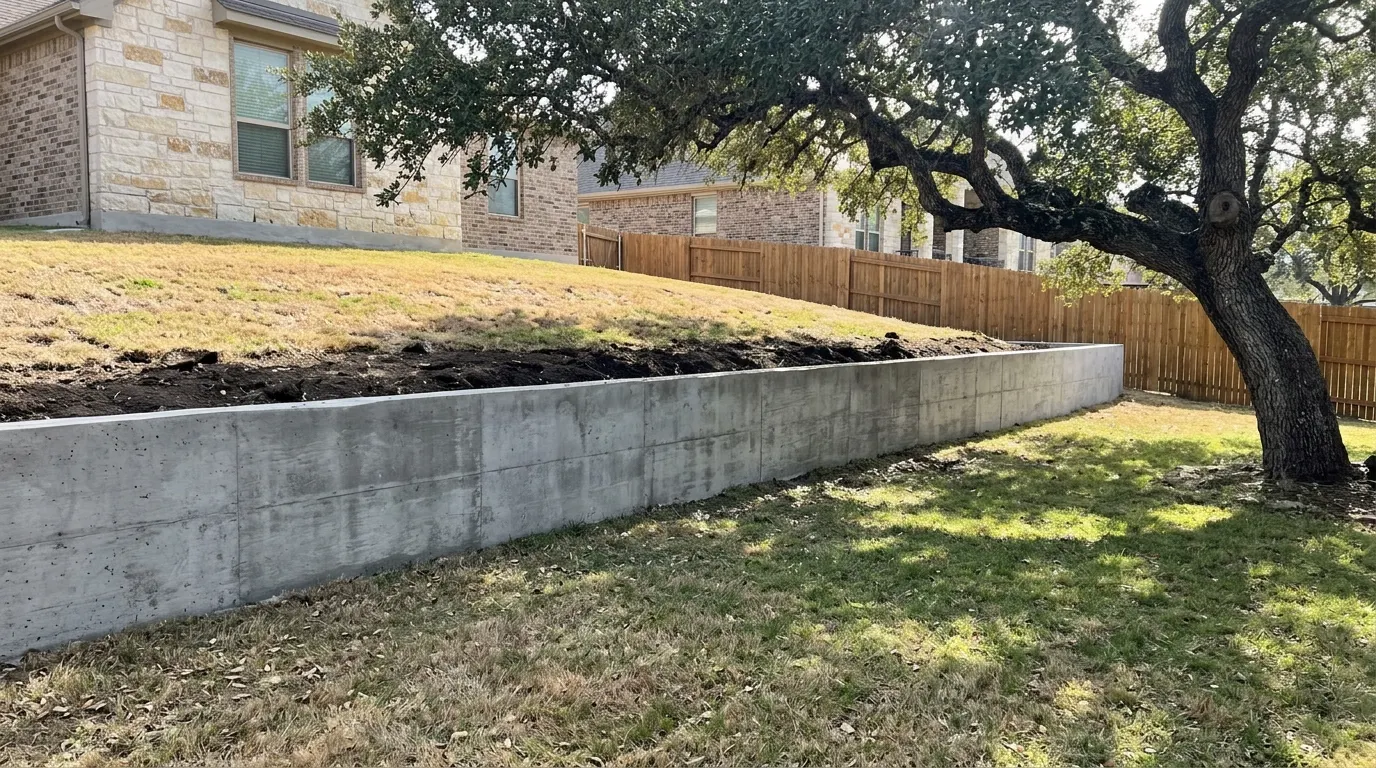
What We Handle
- Poured concrete retaining walls
- Garden and terrace walls on sloped yards
- Walls to level a building or driveway pad
- Seat walls around patios
- Drainage gravel and weep holes behind walls
- Replacing leaning or cracked old walls
When You Need Retaining Walls
You might need a retaining wall if soil keeps sliding toward your house, your back yard drops off too steeply to use, or a fence line is slowly leaning downhill. Other signs are a timber or stacked block wall that is bowing, cracking or rotting out. If you are building a shop, pool or patio on a slope, a wall can create the flat pad you need. It also helps when runoff from a neighbor's higher lot keeps eroding your yard after every heavy rain.
Our Process
Walk the slope
We look at the grade, where water runs and how much soil the wall needs to hold back. Taller walls may call for an engineered design, and we will tell you if yours does.
Dig the footing
Our crew excavates down to firm ground and forms a footing wide enough to resist tipping. On rocky lots this can mean cutting into limestone.
Set steel and forms
Rebar ties the footing and wall together, and forms are set straight and plumb before any concrete arrives.
Pour and cure
We pour early in the day and keep the wall moist so it cures strong instead of drying out in the heat.
Drain and backfill
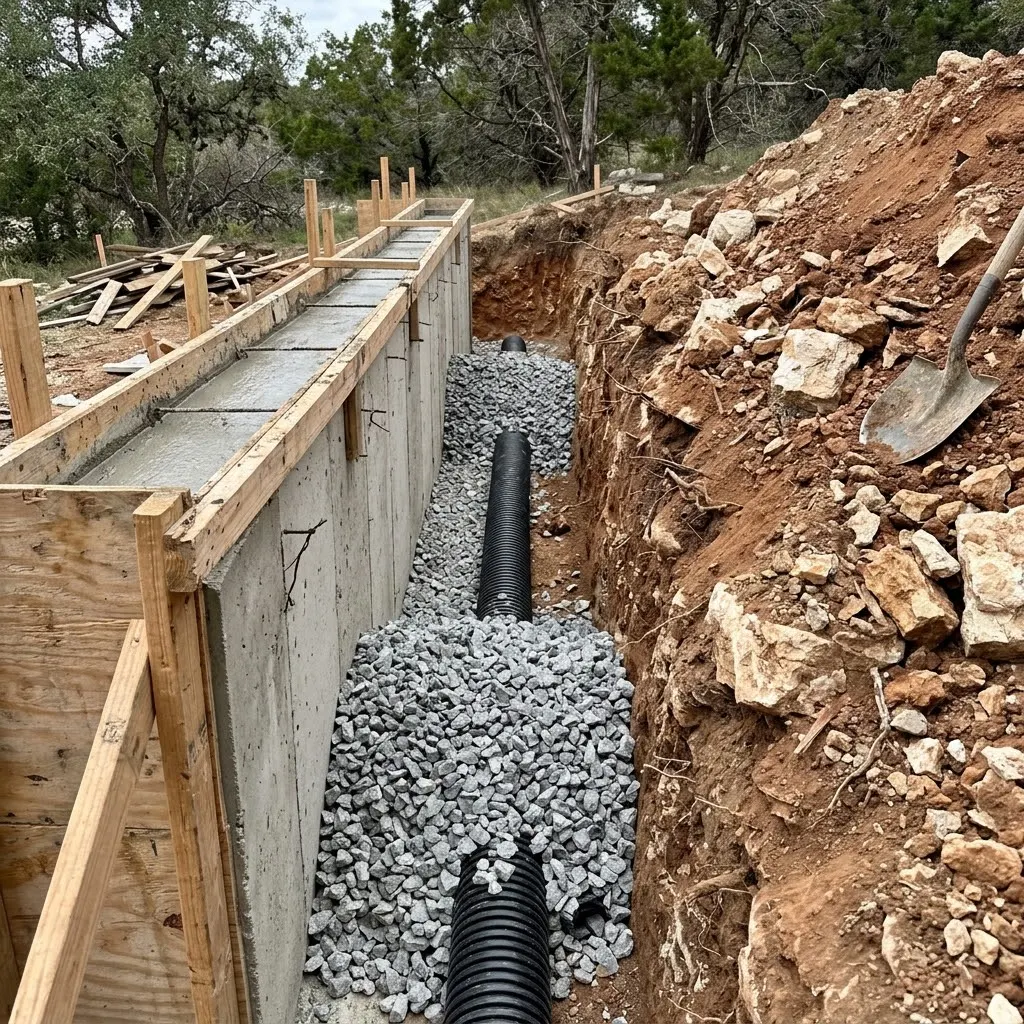
Gravel, drain pipe and weep holes go behind the wall so water can escape, then we backfill and grade the soil.
Built for Georgetown Soil and Heat
Water is what knocks most retaining walls over in Georgetown, not the dirt itself. East of I-35, the clay soil swells when it gets soaked and pushes hard against anything holding it back. West toward Liberty Hill and Leander, shallow soil over limestone means more rock work to set a proper footing. Spring and fall storms can dump a lot of rain fast. That is why every wall we build gets a drainage path behind it, with clean gravel, a drain pipe where it fits and weep holes, so pressure never has a chance to build up.
What Affects the Price
- Height and length of the wall
- How much digging or rock cutting the footing needs
- Amount of steel the design calls for
- Drainage pipe and gravel behind the wall
- Access for trucks and equipment on a slope
- Finish, such as smooth, board formed or textured
Why Customers Choose Us
Retaining Walls FAQ
How tall can a concrete retaining wall be without an engineer in Georgetown TX?
It depends on the wall, the soil and the local rules, and taller walls often need an engineered design. We will look at your slope and let you know whether yours needs one before we quote it.
Why do retaining walls lean or crack?
Most of the time it is water pressure building up behind the wall, or a footing that was too small. Good drainage and a solid, steel reinforced footing prevent most of these failures.
Is poured concrete better than a block retaining wall?
Both can work. Poured concrete with rebar is one solid piece, which makes it a strong choice for walls that hold back a lot of soil or sit near a driveway or building.
Can you replace an old timber retaining wall?
Yes. We remove the old wall, haul off the debris and build a new concrete wall with proper drainage in its place.
How long does it take to build a poured concrete retaining wall?
It depends on the length, the height and how hard the digging is. The footing and the wall are usually poured in stages, and the forms stay on while the concrete gains strength before drainage and backfill go in. We give you a timeline after we walk the slope.
Will a retaining wall stop water from washing out my yard?
A wall holds soil in place, but it does not stop runoff by itself. Most washout problems need the wall paired with grading, a swale or a drain that steers water around it. We look at where the water is coming from before we plan the wall.
Can a concrete retaining wall look nicer than plain gray?
Yes. Poured walls can have a board formed texture, a smooth face or a stain that blends with the house and landscaping. It helps to pick the finish before we quote, since the forms are built around the look you want.
What affects the cost of a retaining wall in Williamson County?
Height and length matter most, followed by how much digging the footing takes. Lots out toward Leander and Liberty Hill often have limestone close to the surface, which adds rock work, and drainage behind the wall and equipment access on a slope also play a part. Call 737-352-6148 or request a quote and we will price your wall after seeing it.