
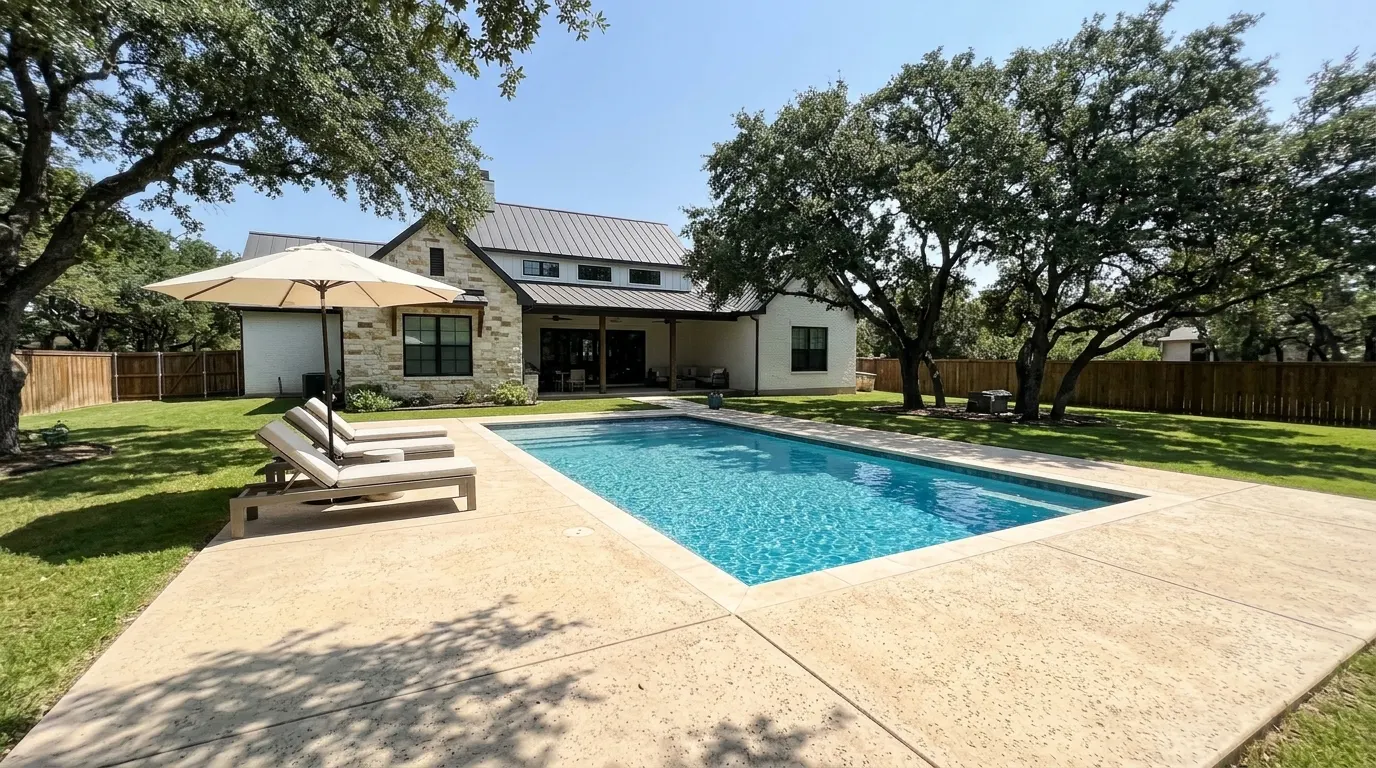
What We Handle
- New pool deck installation
- Pool deck extensions for lounge space
- Cool deck and textured finishes
- Stamped and colored pool decks
- Deck drains and slope correction
- Old pool deck tear out and replacement
When You Need Pool Decks
If the deck around your pool burns your feet by noon, feels slick when wet or holds puddles after every swim, it is time to look at a new surface. Wide cracks and lifted slabs near the coping are trip hazards for kids running around the water. New pool builds need a deck once the shell is done, and many owners decide the original strip of concrete is too narrow for chairs, a table and a grill.
Our Process
Plan the layout
We walk the yard with you and mark where chairs, shade, steps and the gate will go, so the deck fits how you use the pool.
Set slopes and drains
We grade the base so water flows away from the pool and the house, and add deck drains where the yard needs them.
Form and reinforce
Our crew compacts the base, sets forms along the coping and places reinforcement before the pour.
Pour and texture
We pour, then apply the finish you chose, from a light broom to a textured cool deck coating or stamped pattern.
Cure and seal
We cure the concrete properly and seal it when the finish calls for it, so it stands up to pool water and chemicals.
Built for Georgetown Soil and Heat
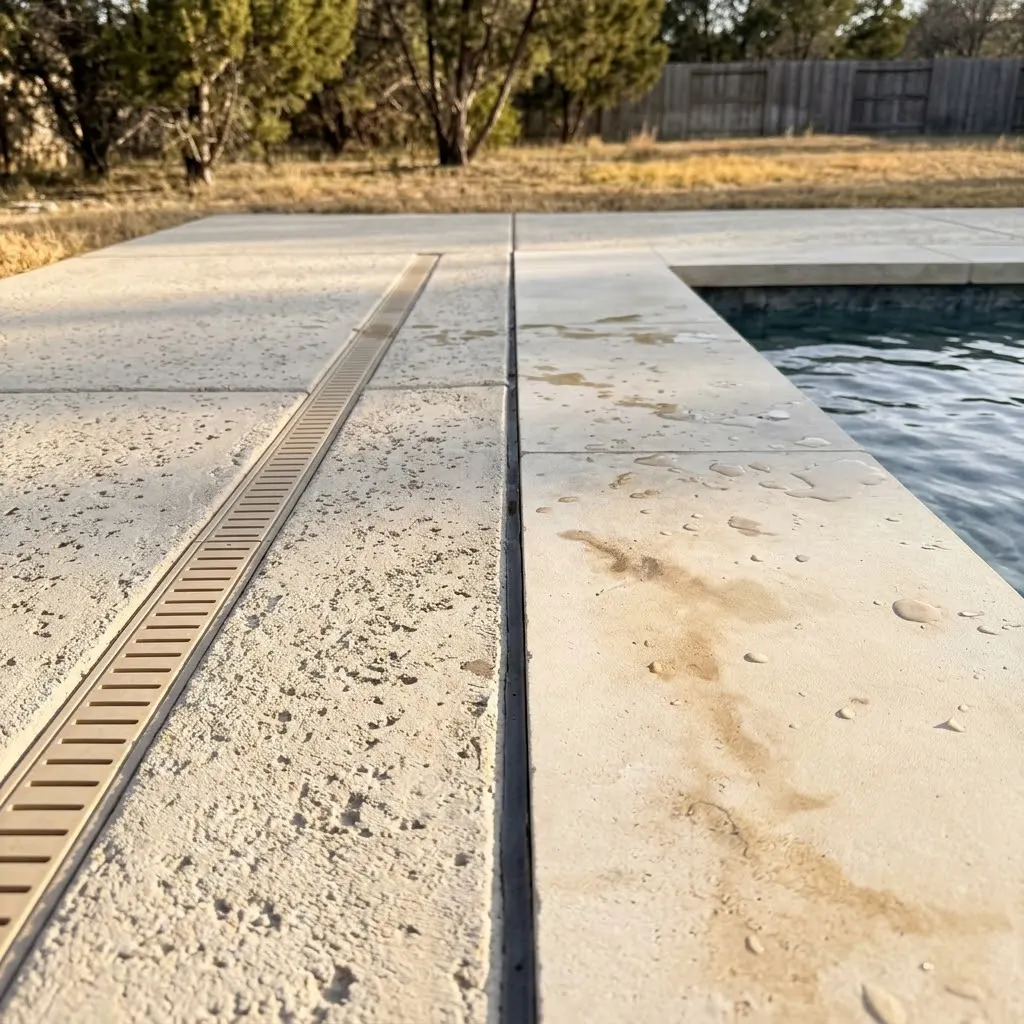
Georgetown pool season runs long, and summer afternoons near 100 degrees turn plain gray concrete into a hot plate. We steer most customers toward lighter colors and textured finishes that stay more comfortable underfoot. Because pools sit in a big hole, the backfill around the shell can settle, and the clay soil east of I-35 moves as it gets wet and dries out. Our crew compacts that ground before forming, slopes the deck away from the water and plans joints so any movement shows up as a neat line, not a random crack.
Estimate Your Concrete
What Affects the Price
- Deck size and shape around the pool
- Finish type, broom, cool deck or stamped
- Color and sealer choices
- Drains and grading work
- Removing an old deck first
- Yard access for equipment
Why Customers Choose Us
Pool Decks FAQ
What is the coolest concrete finish for a pool deck in Texas?
Lighter colors and textured coatings, often called cool deck, stay noticeably more comfortable than plain gray concrete in direct sun. No concrete stays cold in July, but the right finish helps a lot. We can show you options during the site visit.
Can you replace the concrete around my existing pool?
Yes. We remove the old deck carefully near the coping, fix the base and pour new concrete with better slope. Austin Concrete Contractors Georgetown handles the tear out and the new pour.
Is stamped concrete slippery around a pool?
Stamped concrete can get slick if it is sealed with the wrong product. We use a texture and a sealer with grip added, so the deck stays safer when wet.
How long until we can swim after a new pool deck is poured?
You can usually walk on the deck within a day or two, though furniture and heavy use should wait longer. We will tell you when the deck and any sealer are ready for a full pool day.
How thick should a concrete pool deck be?
Most residential pool decks are about 4 inches of concrete over a compacted base, with reinforcement throughout. Spots that will carry more weight, like an outdoor kitchen or a heavy planter, may get a thicker section. We set the details after we see your yard and how you plan to use it.
Do pool chemicals or salt water damage a concrete deck?
Chlorine splash and salt from a saltwater pool can slowly wear the surface, especially on concrete that was never sealed. A good sealer slows that down, and rinsing the deck with a hose after shocking the pool keeps chemicals from sitting on it. Plan to reseal every few years to keep the protection up.
When is the best time of year to pour a pool deck in Central Texas?
Spring and fall are the easiest seasons, because milder weather lets the concrete cure more evenly, and a spring pour means the deck is ready for swim season. Summer pours work too, we just start at first light and keep the slab damp. For a new pool, the deck goes in after the shell and plumbing are finished.
Why is there a gap between my pool coping and the deck?
That joint is supposed to be there, since it lets the deck move without pushing against the pool. When the flexible sealant in it dries out and cracks, water can run underneath and wash out the base. Keeping that joint sealed is simple upkeep, and if the deck has already sunk we can take a look.