
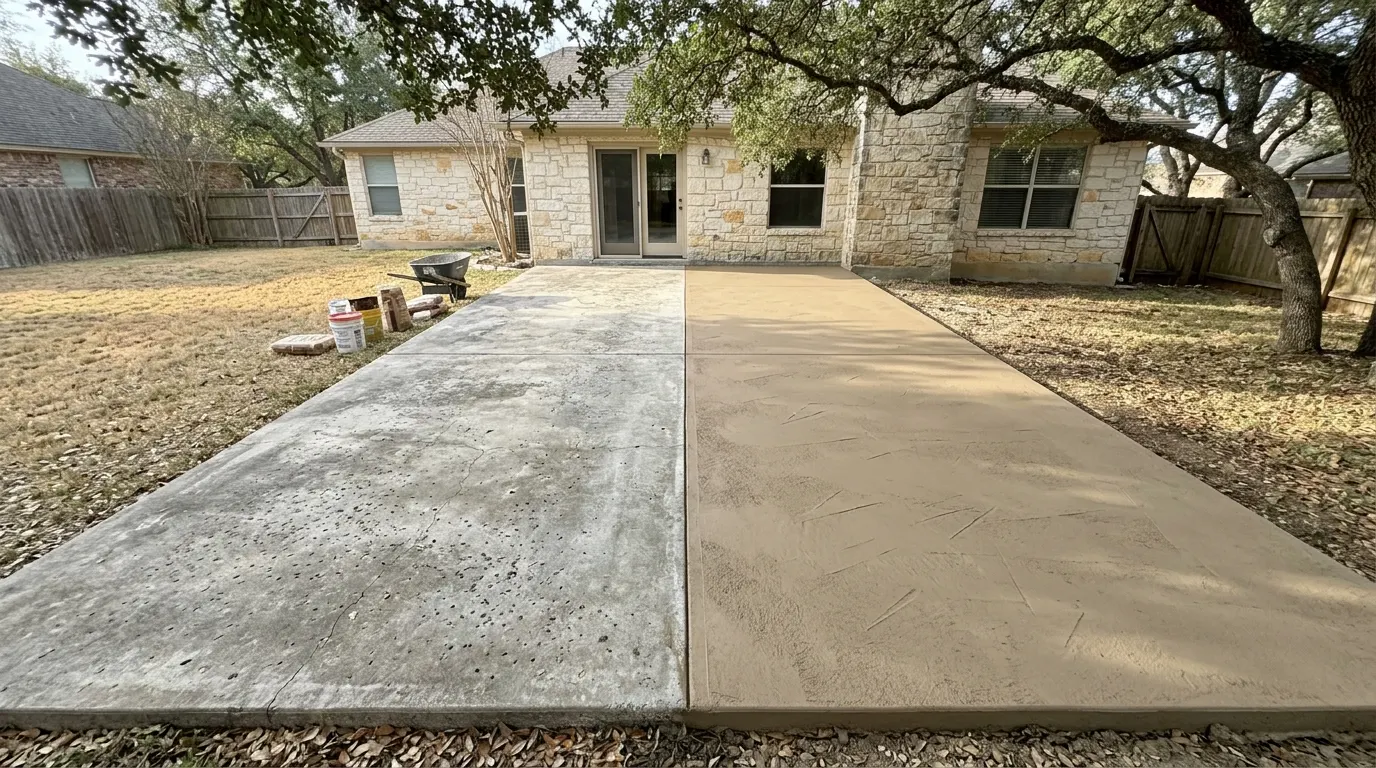
What We Handle
- Driveway resurfacing
- Patio resurfacing
- Pool deck resurfacing
- Walkway and porch resurfacing
- Spalled and flaking surface repair
- Textured, colored and spray knockdown overlays
When You Need Concrete Resurfacing
Resurfacing fits when the concrete is still level and mostly in one piece but the top looks rough. Common signs are oil stains that will not come out, surface flaking from age, small pits, rust spots or a mismatched look from old patches. It is also a way to update an older pool deck or patio to a new color. If the slab is sinking, heaving or badly broken, resurfacing will not hold, and we will point you toward repair or replacement instead.
Our Process
Test the slab
We check that the concrete is solid, level and bonded, since an overlay is only as good as the slab under it.
Deep clean and profile
We pressure wash, remove loose material and grind or etch the surface so the new layer can grip.
Repair first
Our crew fills cracks and patches spalled spots so they do not show through the new surface.
Apply the overlay
We spread or spray the resurfacing mix, then add the color, texture or pattern you picked.
Seal and wait
We seal the finished surface and let you know when it is ready for foot traffic and vehicles.
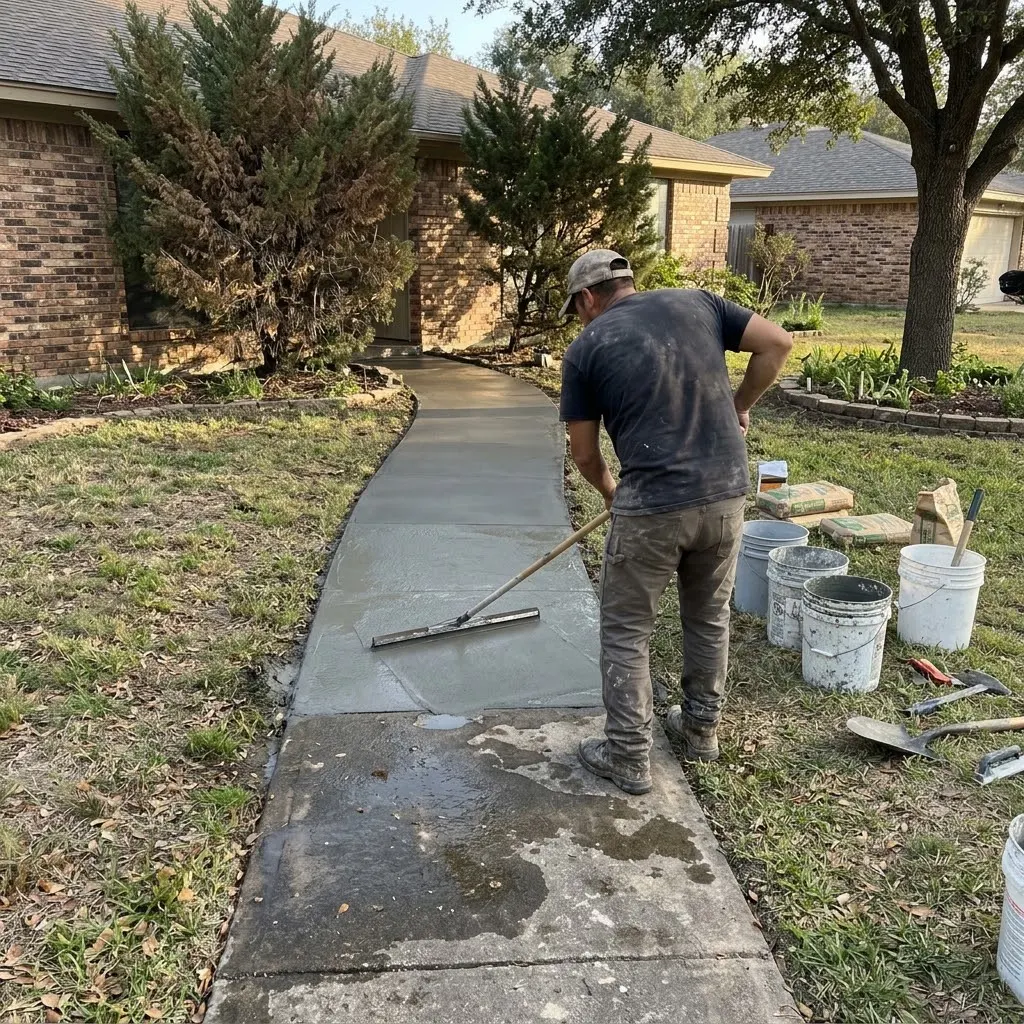
Built for Georgetown Soil and Heat
Overlays have a short working time, and that window gets even shorter on a hot Georgetown afternoon. We start early, keep the old slab damp before applying, and avoid days when the surface is baking in direct sun. Because our clay soil moves, any active crack in the slab can come right back through a new layer, so we treat and match existing joints instead of covering them over. A good sealer matters here too, since strong sun and pool water both wear down a surface faster.
What Affects the Price
- Square footage
- Condition of the existing surface
- Crack and spall repair needed first
- Overlay type and texture
- Color and sealer choices
- Steps, edges or tight areas
Why Customers Choose Us
Concrete Resurfacing FAQ
Is concrete resurfacing worth it compared to replacing?
If the slab is solid and level, resurfacing usually costs less and takes less time than replacing it. If the concrete is sinking or badly broken, an overlay will not last, so replacement is the better spend.
How long does concrete resurfacing last in Georgetown, TX?
It depends on the condition of the slab underneath, the traffic it gets and how well it is sealed and maintained. Resealing every few years helps a resurfaced patio or pool deck hold up to Texas sun.
Can you resurface a cracked driveway?
We can resurface a driveway with minor, stable cracks after repairing them. Cracks that are still moving will usually show through again, and we will be clear with you about that before starting.
Can resurfacing change the color of my concrete?
Yes. Overlays can be tinted, textured or stamped, so you can update a gray patio or pool deck to a new look. Austin Concrete Contractors Georgetown can show you samples.
How thick is a concrete resurfacing overlay?
Most overlays go on as a thin layer, often well under an inch, bonded to the slab below. Because the layer is so thin, it depends on the old concrete for strength, which is why we check that the slab is solid before we start.
How soon can I walk or drive on resurfaced concrete?
Foot traffic is often fine within about a day, while cars need to wait longer. The exact timing depends on the product, the sealer and the weather, and we will tell you before we pack up.
Will a resurfaced pool deck get too hot in the Texas summer?
Lighter colors and textured finishes tend to stay cooler underfoot than dark, smooth ones. If your deck sits in full afternoon sun, we can help you choose a color and texture that stays more comfortable and still gives good grip.
How do I take care of a resurfaced patio or driveway?
Sweep it often, rinse off spills before they soak in and use a mild cleaner instead of harsh chemicals or a narrow pressure washer tip held close. When water stops beading on the surface, it is time for a fresh coat of sealer.