
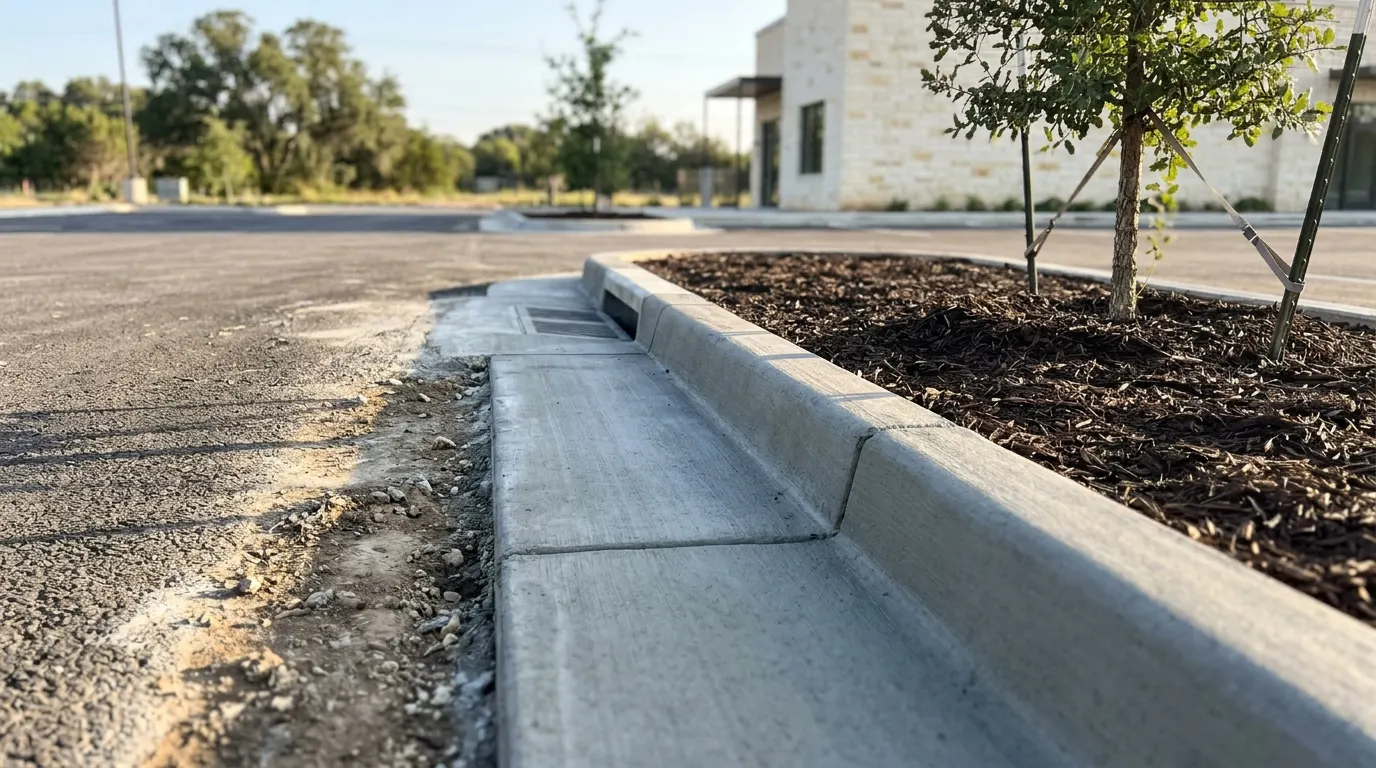
What We Handle
- Curb and gutter for new parking lots
- Replacing broken or sunken curb sections
- Landscape island and median curbs
- Valley gutters and drainage swales
- Curb cuts and ramps at walkways
- Curbing for private roads and HOA streets
When You Need Curb & Gutter
Broken curbs show up as crumbling chunks along a lot edge, sections that have sunk or tipped, or gutters where water just sits instead of flowing to the drain. Pavement edges that are cracking and breaking off are often a sign the curb is no longer holding them. New construction also needs curb and gutter to define parking areas, protect landscape islands and guide runoff. HOAs often call when a section of neighborhood curb has been crushed by trucks or lifted by tree roots.
Our Process
Check the flow
We look at where water runs on the property, where it should end up and which curb sections need work.
Remove damaged curb
Broken sections are saw cut and removed so new concrete ties in cleanly with what stays.
Set the line and grade
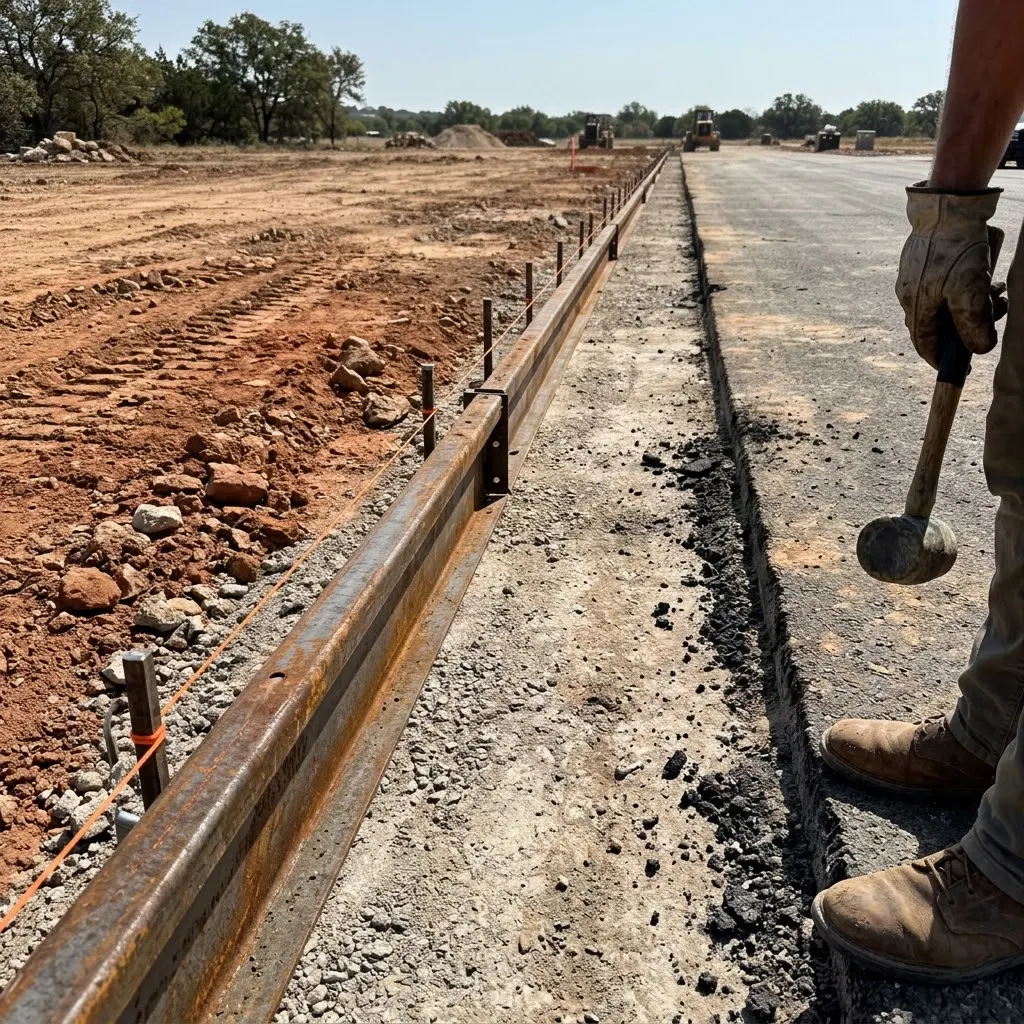
Our crew sets string lines and forms to the right height and slope so the gutter carries water to the drain.
Pour and shape
We pour, shape the curb face and gutter pan, and finish the surface.
Joint and cure
Joints are cut at regular spacing and the concrete is kept moist while it cures.
Built for Georgetown Soil and Heat
Central Texas storms can drop a lot of rain in a short time, and curb and gutter is what keeps that water moving instead of pooling on a lot or running into buildings. Getting the slope right matters more than anything. Even a small low spot holds water that soaks into the clay soil around Georgetown and starts to undermine the pavement. We set grades with string lines, compact the base under the gutter and tie new sections into existing ones so there are no lips to trap water. Summer pours happen early so the thin edges do not crack from drying too fast.
What Affects the Price
- Linear feet of curb and gutter
- Curb style and height
- Saw cutting and removal of old curb
- Number of curb cuts, ramps and transitions
- Drainage changes needed to fix ponding
- Traffic control around a busy site
Why Customers Choose Us
Curb & Gutter FAQ
Can you replace just one section of broken curb?
Yes. We saw cut out the damaged section and pour a new piece that ties into the curb on either side, so you do not have to replace the whole run.
Why is water pooling in my parking lot gutter?
Usually a section has settled or was poured without enough slope toward the drain. Replacing that stretch with the correct grade gets water moving again.
Do you install curb and gutter for HOA streets in Georgetown TX?
Yes. We work on private streets, amenity centers and common areas for HOAs and property managers. Public streets may have their own city requirements, so we will talk through that with you.
What is the difference between a curb and a valley gutter?
A curb is a raised edge with a gutter pan beside it. A valley gutter is a shallow concrete channel across pavement that carries water from one area to another without a raised edge.
How long before vehicles can drive over new curb and gutter?
Concrete keeps gaining strength for weeks, so we ask that vehicles stay off new gutter pans and curb cuts for several days, and longer in cool weather. We block off the area and let you know when it is safe to reopen.
What affects the cost of curb and gutter replacement?
Price depends mostly on how many linear feet need work, the curb style, how much old concrete has to be cut out and whether the grade has to change to fix drainage. Busy sites that need traffic control add to it. Call 737-352-6148 or request a quote and we will walk the property with you.
Is a permit needed to replace curb at a business in Williamson County?
Curb along a public street or right of way often falls under city or county rules, while curbs inside a private lot usually have fewer requirements. Rules vary from city to city, so we can talk it through with you before anything is scheduled.
Why do concrete curbs crack and break off?
Trucks cutting corners, tree roots and soil that swells and shrinks under the curb all put stress on it. Water soaking in behind the curb and thin sections speed up the damage. When we replace a curb, we compact the base and place joints so it handles that movement better.