
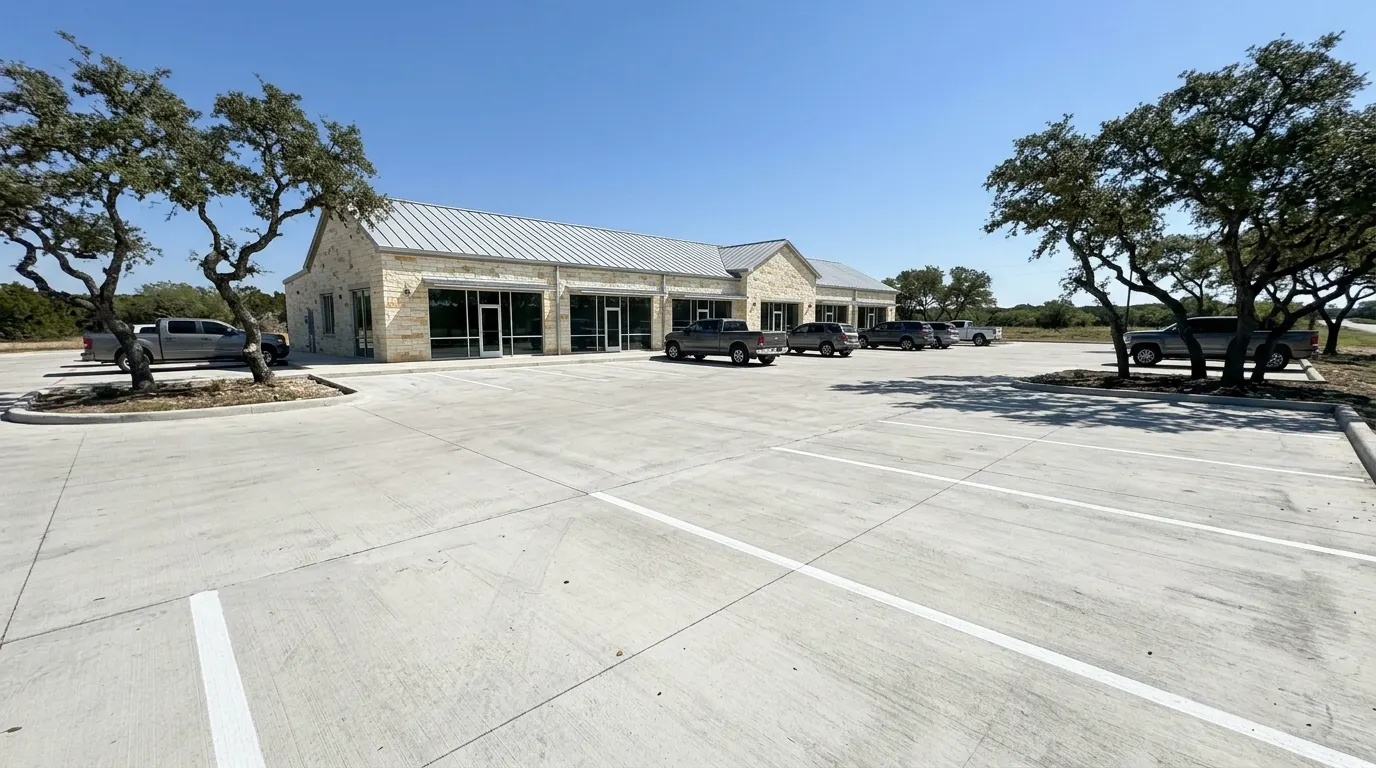
What We Handle
- New concrete parking lots
- Replacing worn asphalt with concrete
- Parking lot expansions and added rows
- Drive aisles and entrance aprons
- Heavier sections for truck and dumpster routes
- Removing and replacing failed panels
When You Need Parking Lots
A lot is due for work when water sits in the same low spots after every rain, cracks keep spreading across drive lanes, or broken edges are starting to catch tires. Customer complaints and trip hazards are a strong signal too. Growing churches and businesses often need more spaces than the original lot was built for. If you are opening a new building, adding a wing or taking over an older property, it is a good time to plan the lot properly from the start.
Our Process
Site review
We walk the property with you to look at traffic flow, truck routes, drainage and any existing pavement that needs to come out.
Plan the work
We map out sections, thickness for heavier traffic areas and how to keep part of the lot open if your business needs to stay running.
Grade and base
Our crew grades for drainage and compacts a firm base so the slab is supported edge to edge.
Pour in phases
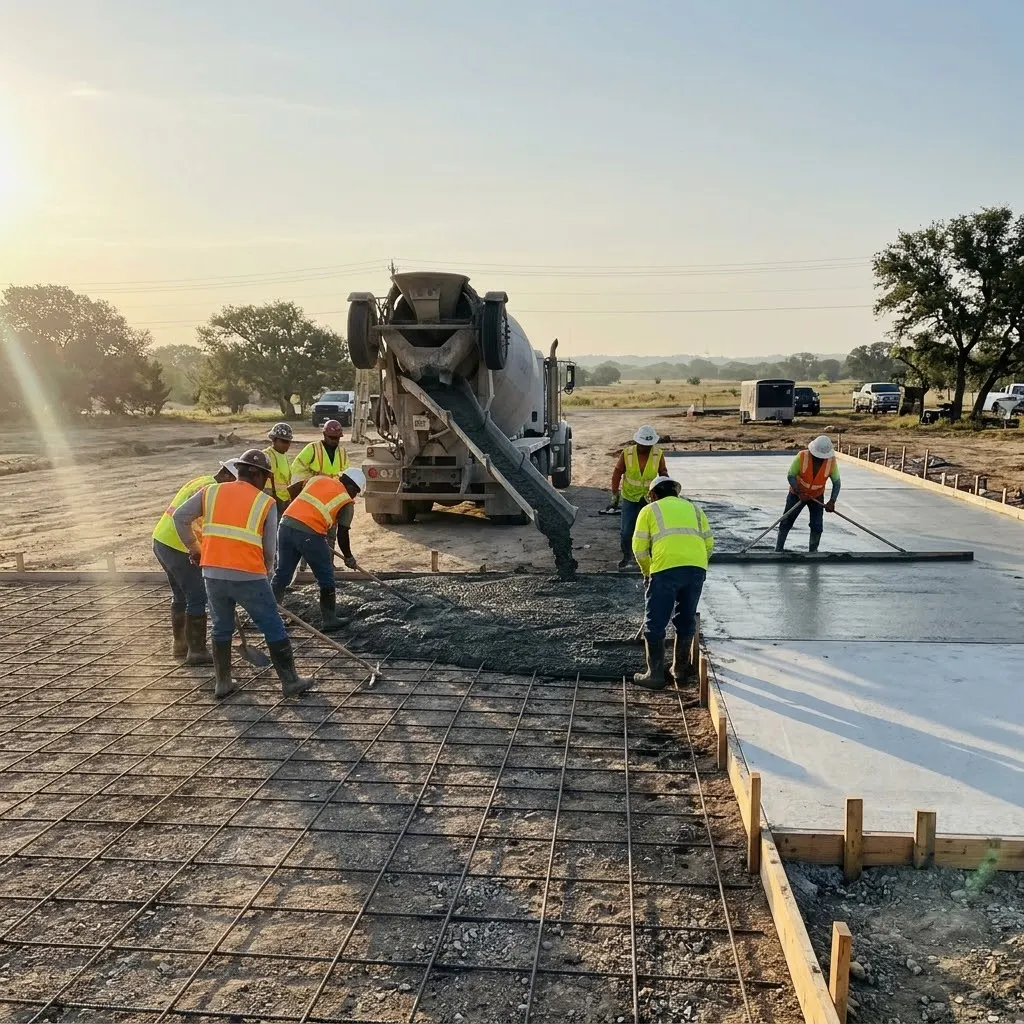
We pour section by section with steel reinforcement and control joints placed to manage cracking.
Cure and reopen
The concrete cures before traffic returns, and we let you know when each area can be opened.
Built for Georgetown Soil and Heat
A parking lot is a big, flat surface, so every inch of Georgetown rain has to go somewhere. If the slope is off, water ponds, soaks into the clay below and softens the base, and that is when panels start to crack under truck weight. East of I-35 the expansive clay swells and shrinks with the seasons, so base prep and joint layout matter a lot. We grade for steady runoff, compact the base and place joints to control where cracks go. In summer we schedule pours for early morning so large sections do not dry out too fast.
Estimate Your Concrete
What Affects the Price
- Total square footage of the lot
- Removal of existing asphalt or concrete
- Grading and drainage work needed
- Thickness for truck and dumpster traffic
- Phasing to keep the business open
- Curbs, aprons and other add ons
Why Customers Choose Us
Parking Lots FAQ
Is a concrete parking lot better than asphalt?
Concrete costs more up front in many cases but tends to need less patching and resurfacing over time. It also holds up well in Texas heat, where asphalt can soften. We can talk through which fits your property and budget.
Can you build a parking lot while my business stays open?
In most cases, yes. We can phase the work in sections so part of the lot stays usable while another part is poured and curing.
How long before cars can park on new concrete?
It depends on the weather and the mix, but cars usually wait several days and heavy trucks wait longer. We will give you a clear reopening plan for each section.
Do you work on church and HOA parking lots in Georgetown TX?
Yes. We build and replace lots for churches, HOA amenity centers, offices and retail properties throughout Georgetown and Williamson County.
How thick should a concrete parking lot be?
Parking stalls that only see cars can be thinner than drive lanes, loading zones and dumpster pads, which carry trucks. We plan thicker, reinforced sections where heavy vehicles travel, and larger commercial projects often have an engineer's plan that sets the thickness.
What drives the cost of a new concrete parking lot?
The size of the lot, removing old pavement, the grading needed for drainage and thicker sections for truck routes all affect cost. Phasing around business hours and adding curbs or aprons do too. Call 737-352-6148 or request a quote and we will walk the site with you.
Does a commercial parking lot in Georgetown TX need city approval?
Commercial paving often involves city review of items like drainage and layout, and the rules vary by city and by project. We can talk through what your project may involve, and your engineer or property owner can confirm the details with the city.
How do I maintain a concrete parking lot?
Keep the joints sealed so water cannot soak into the base, clear debris from drains and gutters and replace broken panels before the damage spreads. A quick walk around the lot after big storms helps you catch ponding early.